
One Cable, Total Control

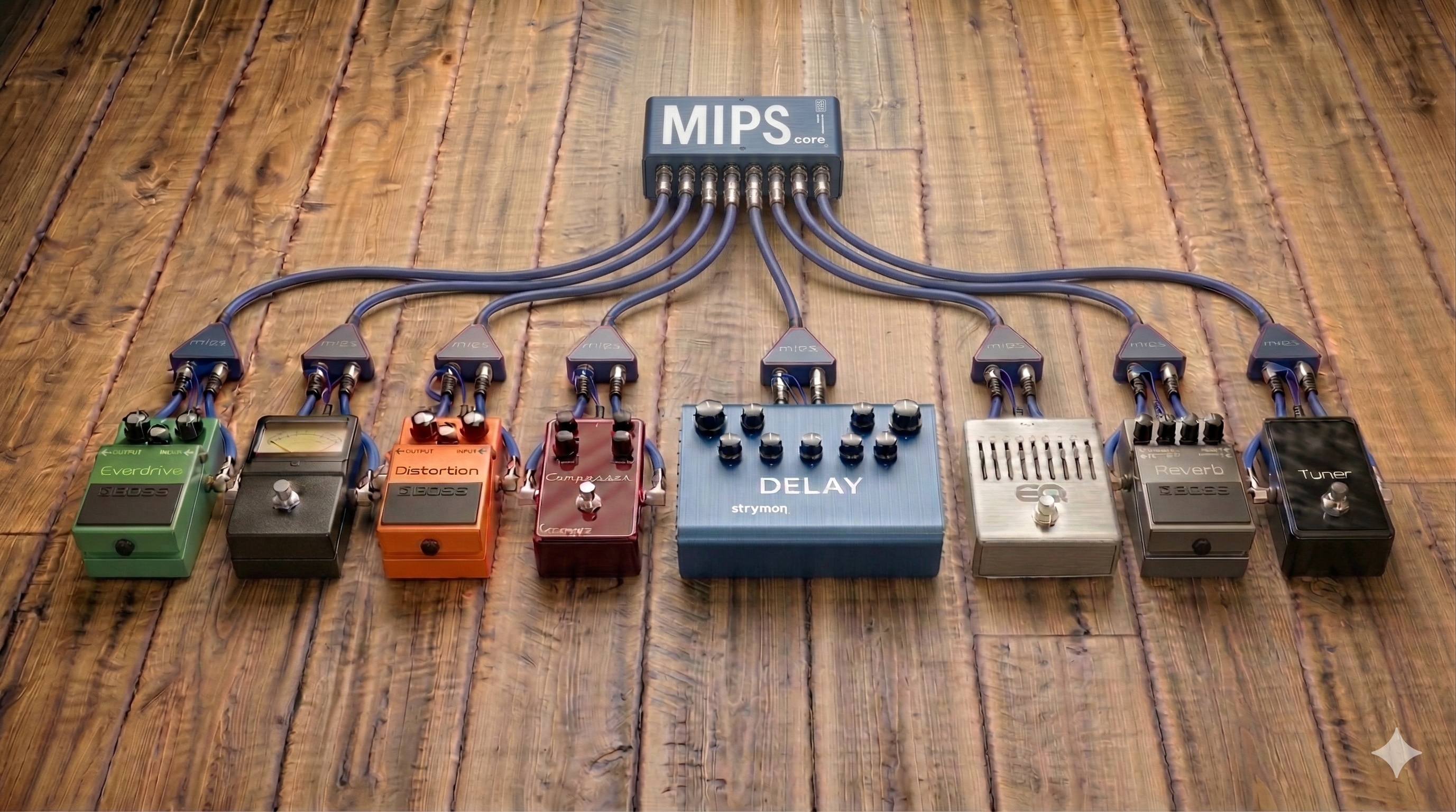
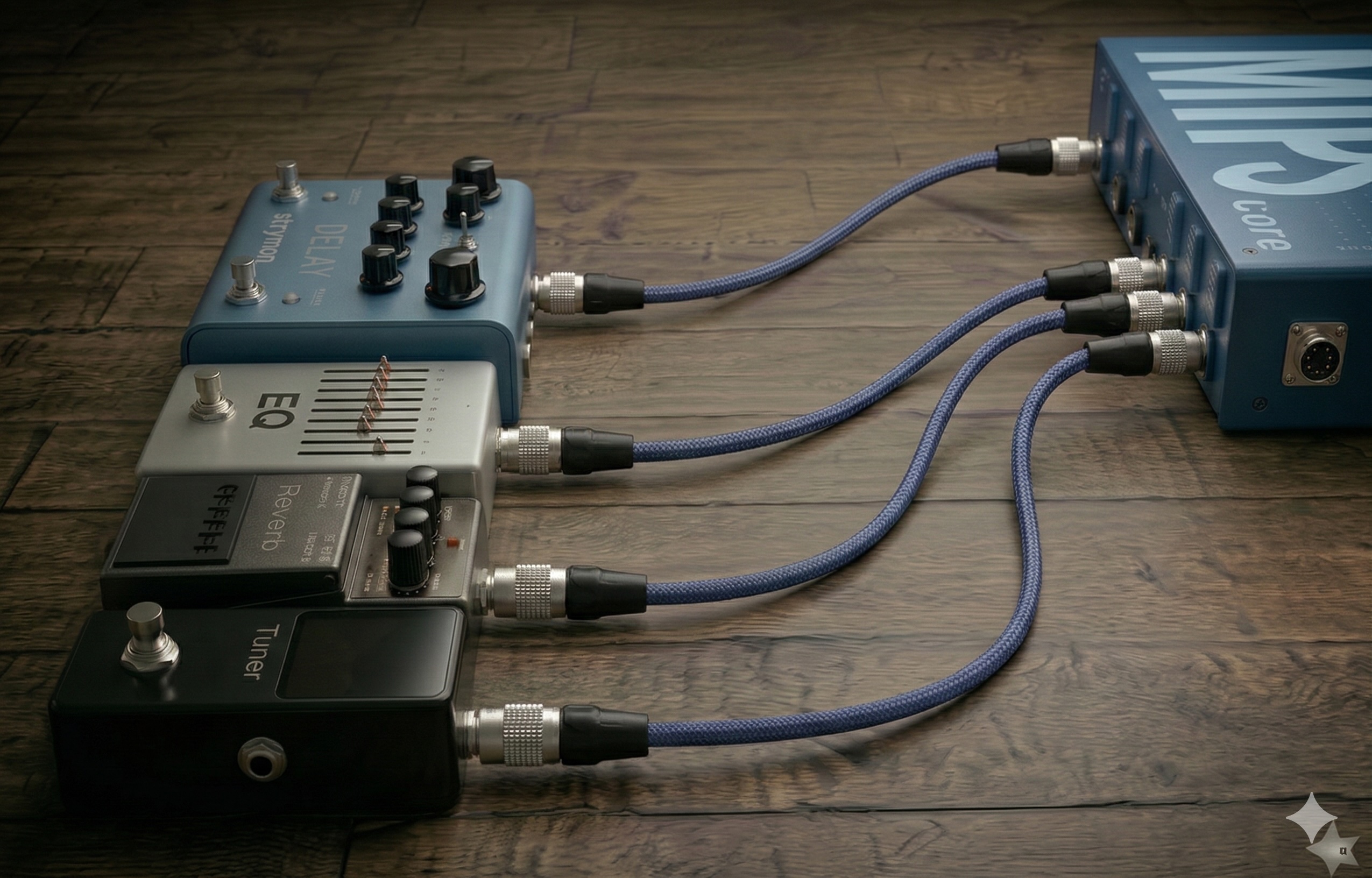
MIP-S V2 System with Core Unit, Pedals, and Foot Controller

8

Pedal Loops
Expandable with Multiple Units

Auto

Fault Detection
Zero Signal Failure

1

Unified Cable

Wireless

Control + App
Unlimited Flexibility

100%

Analog Signal

The Problem with Traditional Pedalboards

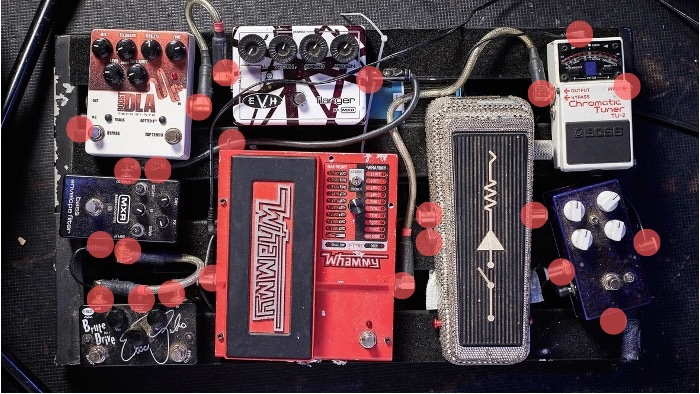
Traditional pedalboard showing multiple failure points

Live Performance

Traditional pedalboard showing cable failure points

One cable fails

Traditional pedalboard showing potential connection failures

One cable fails mid-set → performance stops. The audience notices. Your reputation suffers. Traditional daisy-chain setups create 50+ failure points between your guitar and amp.

Studio Sessions

One cable fails mid-session → the take is lost. Studio time is expensive. Technical failures cost money and kill creative momentum. Hybrid signal chains (analog + modular + digital) multiply failure points exponentially.

MIP-S Auto-Bypass

MIP-S Core connected to 8 pedals via unified cables

Fault-tolerant series topology detects failures in real-time and auto-bypasses the failed loop. Signal continues flowing. Performance continues. Session continues. You stay in the zone.

• Wireless control and app programmability give you unlimited flexibility with your existing and long-loved pedals.

Hot-Swap Capable

Change pedals mid-session without powering down the entire rig—and without pops or noise. Swap effects cleanly. Experiment. Iterate. All while maintaining signal continuity. MIDI recall ensures repeatable presets for touring and session work.

What Makes MIP-S Different

Fault Detection

Intelligent monitoring of each pedal loop. Auto-bypass on failure detection. Signal continuity guaranteed.

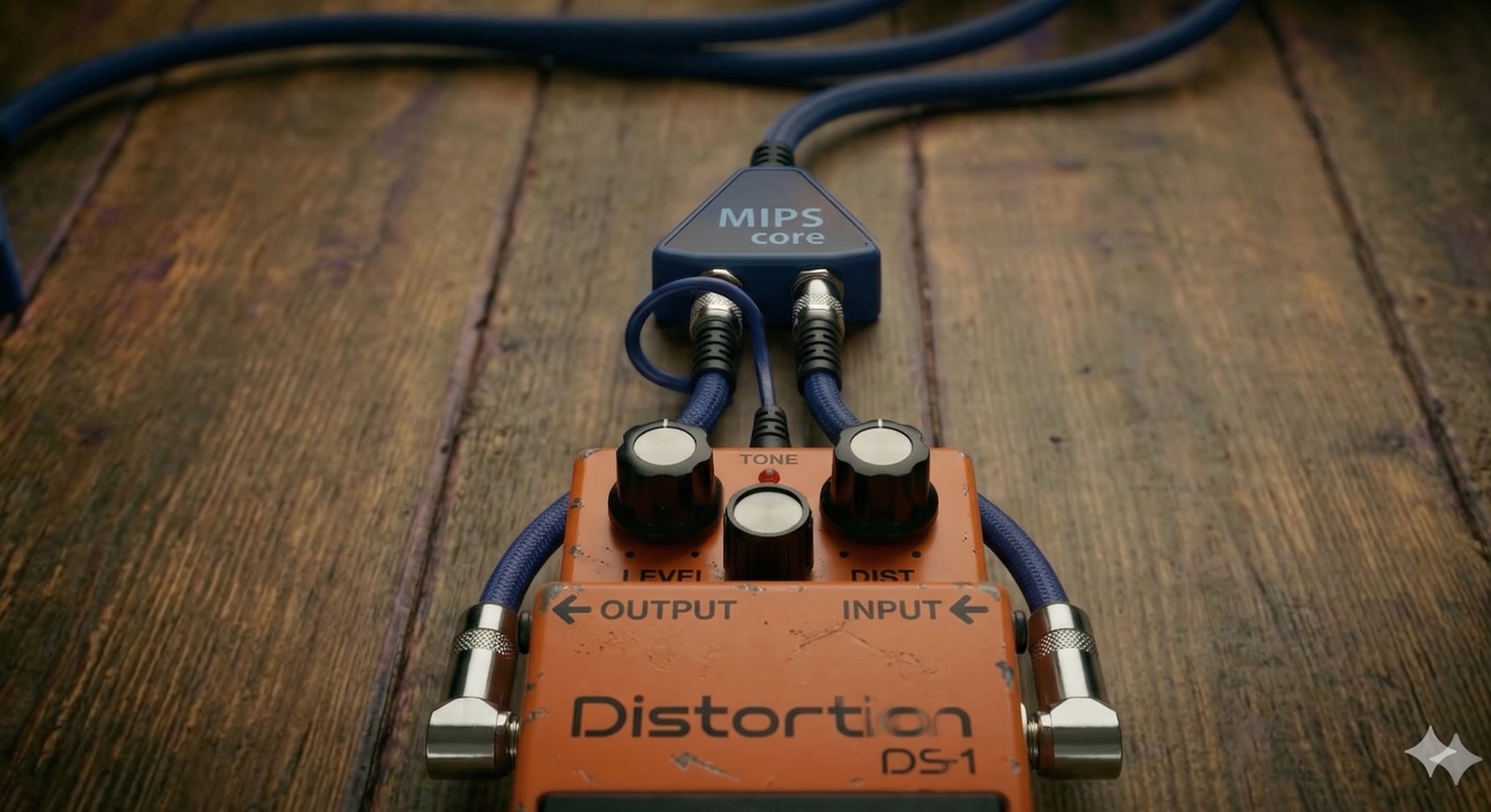
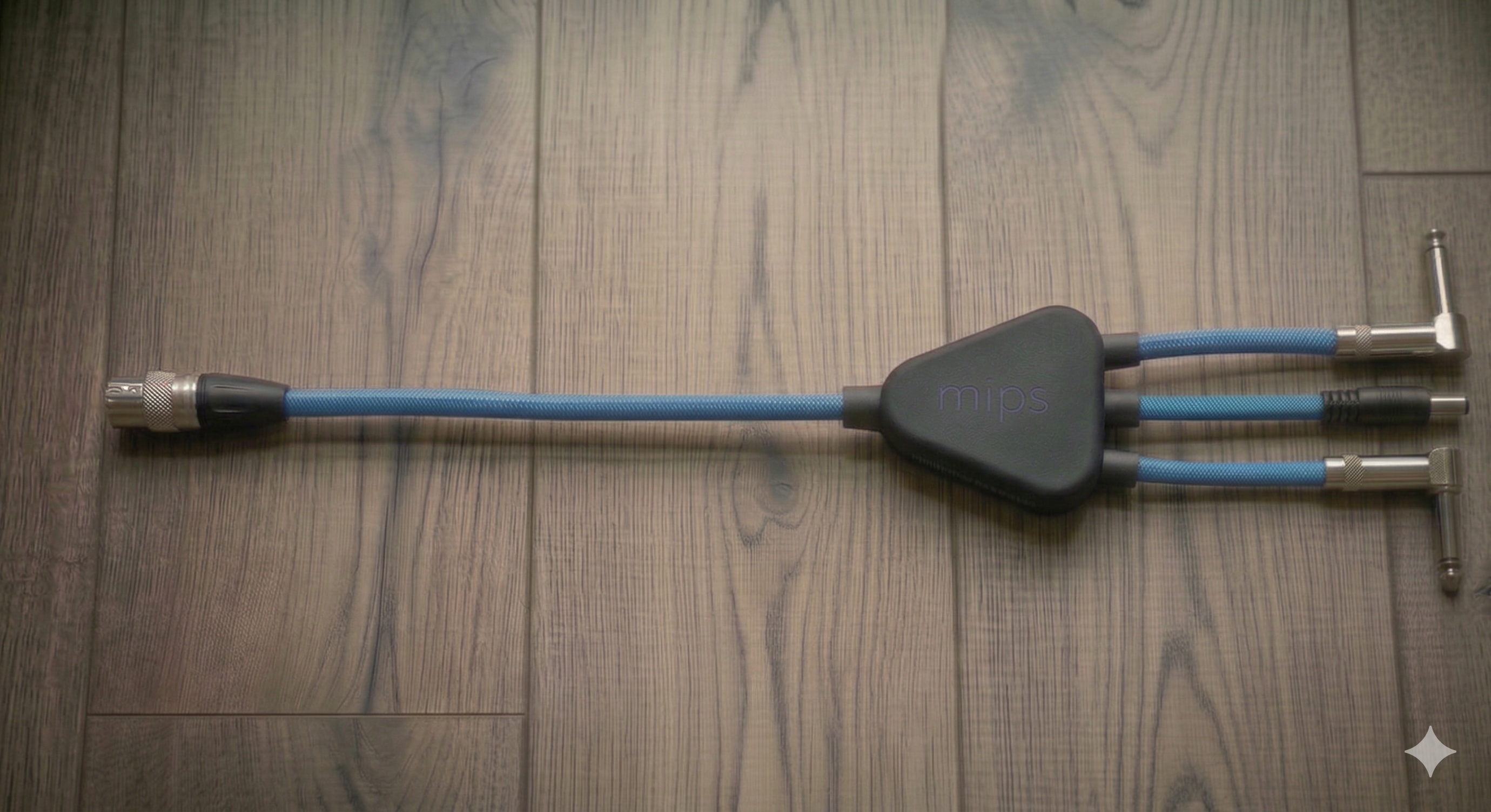
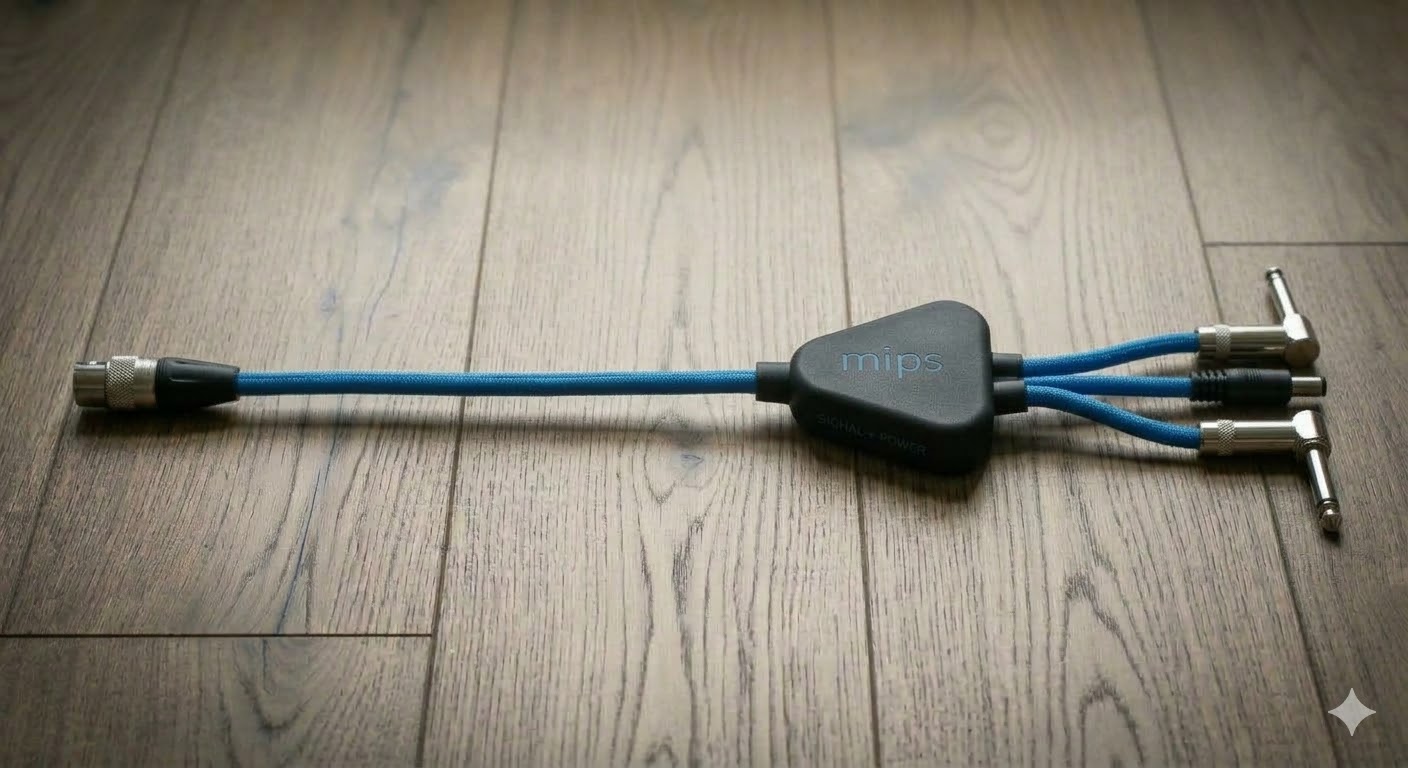
MIP-S unified cable showing breakout adapter

Unified Cable

One cable per pedal carries audio, power, MIDI, and fault detection signals. Eliminates cable spaghetti.

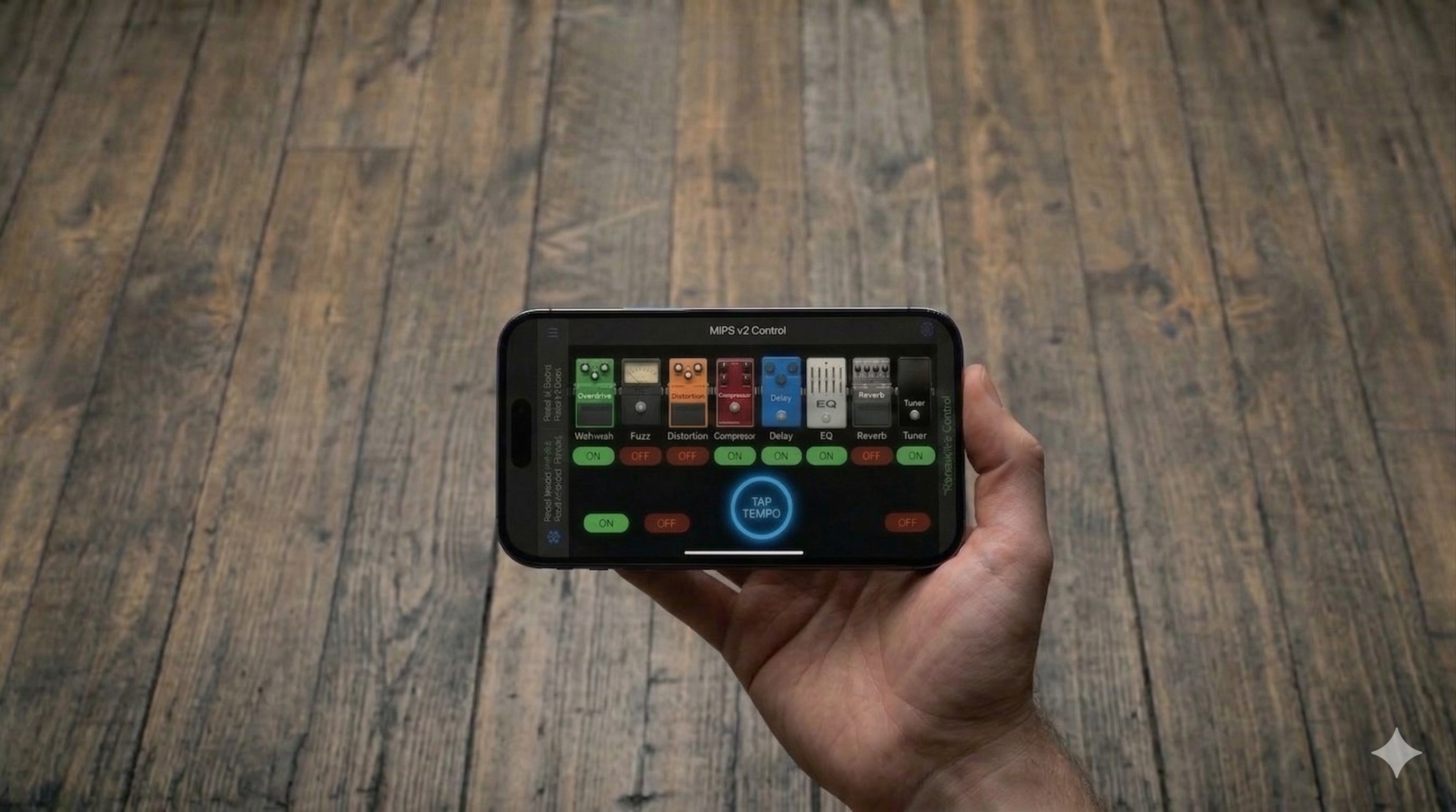
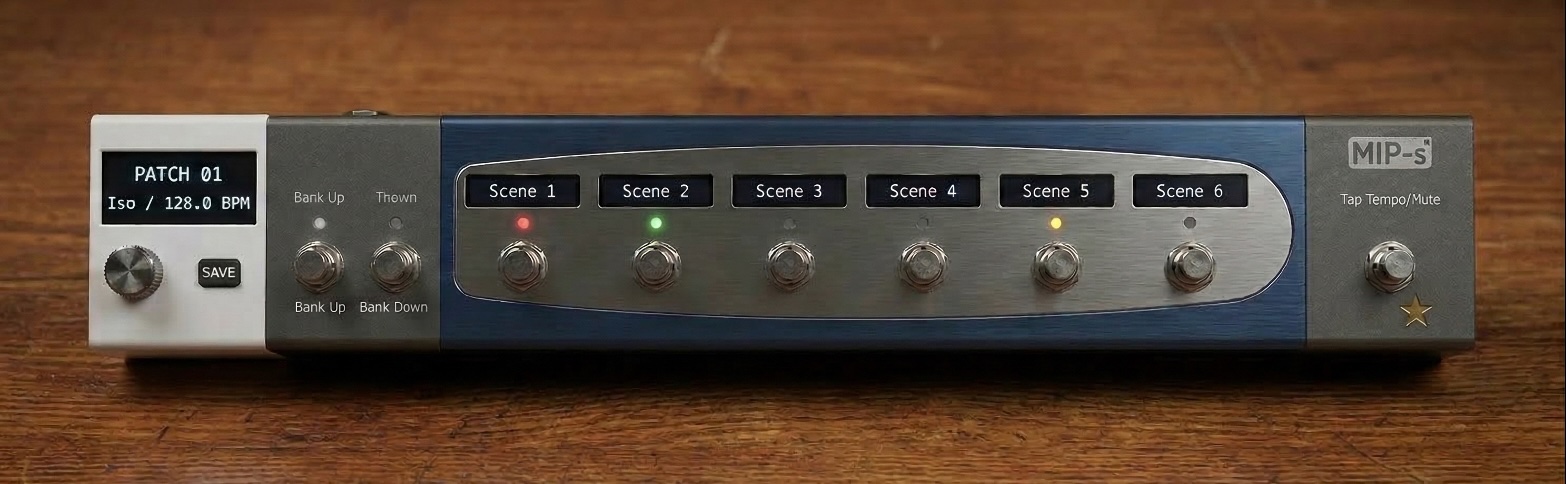
MIP-S app interface MIP-S foot controller

Full MIDI Control

Set up your songs, lead patches, delay times, chorus bumps—anything you can think of—with our app and wireless foot controller. You can even leave the pedals in their case and just use the controller.

🔒

Patented Tech

Patented technology with CIP PAF for MIP-S V2. Discrete loop series architecture with automatic bypass. Proven on tour with V1.

🎸

True Bypass

100% analog signal has no degradation. No latency. Transparent tone when loops are active. Studio-grade signal integrity.

🔧

Hot-Swap

Change pedals without powering down. Experiment freely. Iterate quickly. Perfect for creative sessions.

Technical Specifications

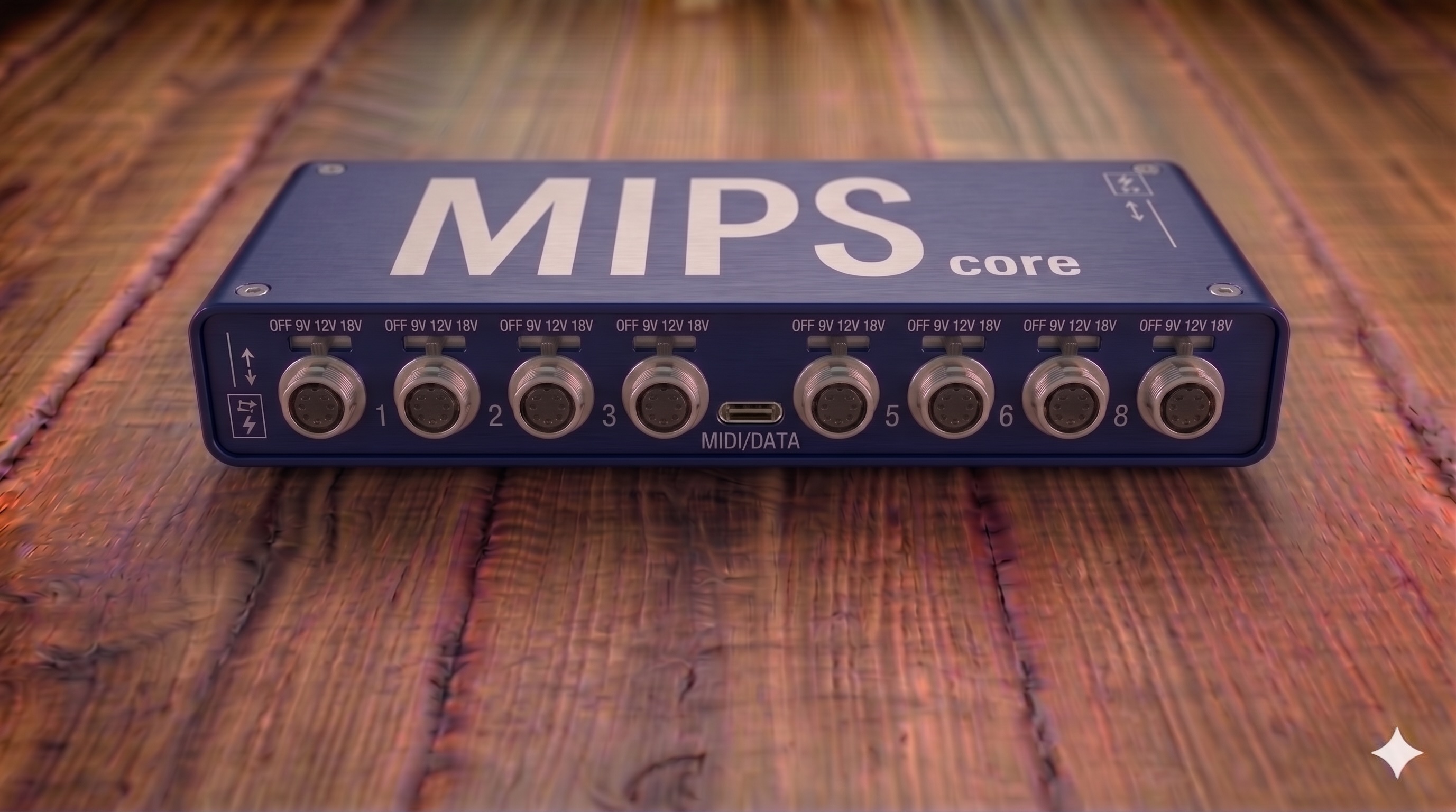
Number of Loops 8 discrete monitored loops
Switching Type MOSFET relay (true bypass)
MIDI Implementation Full MIDI I/O, 48 presets
Power Output Multi-voltage (9V, 12V, 18V)
Connectors Neutrik locking (tour-grade)
Signal Latency < 100ms (imperceptible)
Enclosure Anodized aluminum chassis
Dimensions 14" × 8" × 3"

Join the Waitlist

MIP-S V2 is currently in development. Reserve your unit and be among the first to experience fault-tolerant pedal infrastructure.

Pre-Order Now ($599) Investor Inquiry

The Story

In 2017, Dan was on stage performing live with They Might Be Giants when a single cable in his pedalboard failed and took the entire board down with it. The show stopped. It was not the first time, and it would not be the last. That recurring failure exposed a deeper problem with traditional serial pedalboards: one bad cable can collapse the whole signal chain. MIP-S started as Dan’s answer to that problem — invent the fix, then build it.

Dan Miller

Founder

Grammy-winning guitarist with They Might Be Giants. Twenty years touring professionally. Inventor on US Patent 10,867,590 covering the V1 architecture and CIP PAF for MIP-S V2.

Scott Bozack

Electrical Engineering

Tour Manager and FOH Engineer for They Might Be Giants, Indigo Girls, Meshell Ndegeocello, and OKGO. Decades on professional tours. Designed the fault detection circuitry and power management system. Knows what breaks on the road and how to prevent it.

Joe Transue

Mechanical Engineering

Enclosure design, connector engineering, and production-ready mechanical specifications. Responsible for translating the V2 concept into manufacturable hardware. Focused on durability, thermal management, and field serviceability.